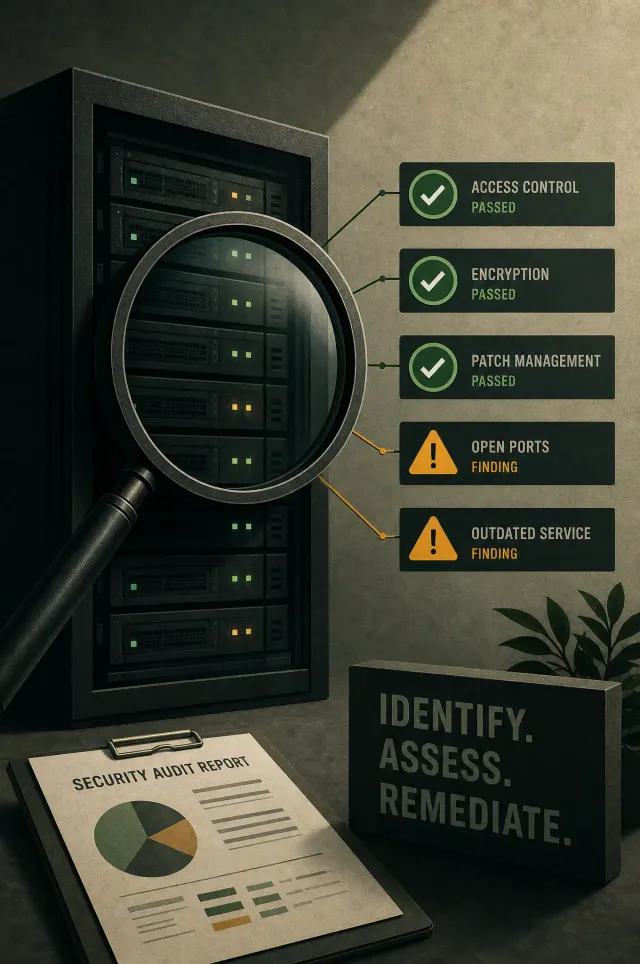
If you administer Linux servers in production, there’s a vulnerability you need to patch right now. Codenamed “PinTheft,” CVE-2026-43494 is a local privilege escalation (LPE) flaw in the Linux kernel that can grant any local user full root access. Security researcher Aaron Esau and the V12 Security team publicly disclosed it on May 19, 2026, and a proof-of-concept exploit is already circulating.
This isn’t a theoretical risk. If an attacker or compromised account can run code on your machine — even without elevated privileges — PinTheft can escalate them to root in minutes. Here’s everything you need to know about the vulnerability, how to check if your servers are exposed, and the steps to fix it.
What Is PinTheft?
PinTheft targets the Linux kernel’s Reliable Datagram Sockets (RDS) subsystem, specifically a reference counting bug in the zerocopy send path. On its own, this bug is relatively harmless. But when combined with the kernel’s io_uring fixed buffer mechanism, it creates a devastating chain that allows attackers to overwrite the page cache of a SUID-root binary — effectively rewriting any setuid binary on the system to spawn a root shell.
The exploit chain works like this:
- The attacker triggers the RDS zerocopy refcount bug, which creates a stale page reference in kernel memory.
- io_uring fixed buffers maintain access to that stale page after it should have been released.
- The attacker uses this access to overwrite the page cache of a SUID-root binary (like
/usr/bin/passwdor/usr/bin/sudo). - When the modified binary executes next, it runs arbitrary code as root.
Why the Name “PinTheft”?
The name comes from the core mechanism: the exploit “pins” a kernel page that should have been freed, then “steals” control of it to corrupt SUID binaries. It’s a clever name for a serious vulnerability.
Affected Systems and Kernel Versions
PinTheft was fixed in the mainline Linux kernel tree, but unpatched servers remain vulnerable. Here’s what you need to know about your specific platform:
| Platform | Status | Notes |
|---|---|---|
| Mainline kernel (upstream) | Patched | Fix merged into mainline tree |
| Ubuntu 22.04/24.04 | Mitigated by default | Ubuntu disables the RDS attack surface in default configs |
| Debian 12 | Requires patching | Verify kernel version is patched |
| RHEL 9 / AlmaLinux 9 | Check status | Depends on kernel update level |
| CloudLinux 7/8/9 | Not affected | CloudLinux testing confirmed no exposure |
Critical: Just because your distribution has a default mitigation doesn’t mean you’re safe. If RDS was manually enabled, or if you’re running a custom kernel, you could still be exposed.
How to Check if Your Server Is Vulnerable
Step 1: Check Your Kernel Version
First, identify which kernel you’re running:
uname -rCompare your kernel version against your distribution’s patched version list. Most major distributions backported the fix to their stable kernel branches by late May 2026.
Step 2: Check if the RDS Module Is Loaded
The RDS module is the primary attack vector. Check if it’s loaded:
lsmod | grep rdsIf you see rds, rds_tcp, or rds_rdma in the output, the module is active and your server may be vulnerable.
Step 3: Check if RDS Is Enabled in the Kernel Config
Even if the module isn’t currently loaded, it might be compiled into your kernel:
grep CONFIG_RDS /boot/config-$(uname -r)Look for:
CONFIG_RDS=m— Module available (can be loaded)CONFIG_RDS=y— Built into kernel (always present)CONFIG_RDS is not set— Not compiled in (safe from this vector)
Step 4: Check io_uring Status
io_uring is the second half of the attack chain:
grep CONFIG_IO_URING /boot/config-$(uname -r)Most modern kernels have io_uring enabled (CONFIG_IO_URING=y). It’s a high-performance I/O framework used by many applications, so disabling it may break services.
Quick Vulnerability Assessment Script
Here’s a quick script you can run to assess exposure:
#!/bin/bash
echo "=== PinTheft (CVE-2026-43494) Exposure Check ==="
echo ""

KERNEL=$(uname -r)
echo "Kernel: $KERNEL"

# Check RDS module
if lsmod | grep -q rds; then
    echo "[HIGH RISK] RDS module is loaded"
    lsmod | grep rds
else
    echo "[OK] RDS module is not currently loaded"
fi

# Check RDS kernel config
RDS_CONFIG=$(grep "^CONFIG_RDS=" /boot/config-$(uname -r) 2>/dev/null)
if [[ "$RDS_CONFIG" == *"=y"* ]]; then
    echo "[WARNING] RDS is built into kernel"
elif [[ "$RDS_CONFIG" == *"=m"* ]]; then
    echo "[MODERATE] RDS is available as a loadable module"
else
    echo "[OK] RDS is not compiled into kernel"
fi

# Check io_uring
if grep -q "CONFIG_IO_URING=y" /boot/config-$(uname -r) 2>/dev/null; then
    echo "[NOTE] io_uring is enabled (common)"
fi

echo ""
echo "=== Recommendation: Update kernel and blacklist RDS if not needed ==="
Save this as check-pintheft.sh, make it executable, and run it with sudo:
chmod +x check-pintheft.sh
sudo ./check-pintheft.sh
How to Patch and Mitigate
Option 1: Update Your Kernel (Recommended)
The most reliable fix is to update to a patched kernel. The commands depend on your distribution:
Ubuntu / Debian:
sudo apt update
sudo apt install --reinstall linux-generic
sudo reboot
RHEL / AlmaLinux / Rocky Linux:
sudo dnf update kernel
sudo reboot
After rebooting, verify you’re running the new kernel:
uname -rOption 2: Blacklist the RDS Module
If you don’t use RDS (most servers don’t — it’s primarily used for Oracle RAC and high-performance cluster computing), you can blacklist it to prevent it from loading:
# Create a blacklist file
sudo bash -c 'echo "blacklist rds" > /etc/modprobe.d/blacklist-rds.conf'
sudo bash -c 'echo "blacklist rds_tcp" >> /etc/modprobe.d/blacklist-rds.conf'
sudo bash -c 'echo "blacklist rds_rdma" >> /etc/modprobe.d/blacklist-rds.conf'

# Remove the module if currently loaded
sudo rmmod rds_tcp 2>/dev/null
sudo rmmod rds_rdma 2>/dev/null
sudo rmmod rds 2>/dev/null

# Verify it's gone
lsmod | grep rds
Verify the blacklist is active by checking that no RDS modules appear:
lsmod | grep rds
echo $?  # Should return 1 (no match found)
Option 3: Disable io_uring (Advanced)
Disabling io_uring provides defense in depth but may break applications that depend on it (modern Node.js, some databases, and asynchronous I/O frameworks):
# Add kernel boot parameter
sudo bash -c 'echo "GRUB_CMDLINE_LINUX_DEFAULT=\"\$GRUB_CMDLINE_LINUX_DEFAULT io_uring=disable\"" >> /etc/default/grub.d/io_uring-disable.cfg'
sudo update-grub
sudo rebootWarning: Only disable io_uring if you’ve verified that no critical services depend on it.
Option 4: AppArmor/SELinux Hardening
Use mandatory access control frameworks to restrict SUID binary modifications:
AppArmor (Ubuntu/Debian):
# Ensure AppArmor is enabled
sudo aa-status

# Add strict profiles for critical SUID binaries
sudo aa-enforce /usr/bin/passwd
sudo aa-enforce /usr/bin/sudo
SELinux (RHEL/AlmaLinux):
# Verify SELinux is enforcing
getenforce

# If it says "Permissive" or "Disabled", enable it:
sudo setenforce 1
# Make permanent:
sudo sed -i 's/SELINUX=permissive/SELINUX=enforcing/' /etc/selinux/config
sudo sed -i 's/SELINUX=disabled/SELINUX=enforcing/' /etc/selinux/config
Understanding the Technical Root Cause
For those who want to understand what’s happening under the hood, here’s a deeper technical breakdown.
The RDS Zerocopy Bug
RDS (Reliable Datagram Sockets) was designed by Oracle for low-latency, high-throughput communication between cluster nodes. The zerocopy feature allows data to be sent directly from user-space buffers without copying through kernel space — which is great for performance, but it requires careful reference counting of kernel pages.
The bug lives in the zerocopy send path: when certain conditions are met, the kernel fails to properly track page references. A page that should be freed remains accessible through a stale reference.
The io_uring Fixed Buffer Connection
io_uring is the modern Linux asynchronous I/O interface. Its “fixed buffer” feature lets applications register memory buffers with the kernel upfront, avoiding repeated registration overhead. The exploit leverages the fact that io_uring fixed buffers can maintain access to pages that the RDS subsystem thought it had released.
The SUID Binary Rewrite
Once the attacker controls a stale page through this chain, they map it to the page cache of a SUID-root binary. The next time that binary is executed — by any user, including root — the attacker’s code runs with full root privileges.
This is why PinTheft is so dangerous: it doesn’t just give the attacker a root shell immediately. It modifies system binaries in a way that provides persistent, repeatable root access.
Broader Lessons for Server Security
PinTheft is a reminder of why defense-in-depth matters:
- Keep kernels updated — The fix was available in mainline within days of disclosure
- Minimize attack surface — Don’t load modules you don’t need (RDS is a perfect example)
- Use mandatory access control — SELinux and AppArmor add critical barriers
- Monitor for anomalies — Unexpected SUID binary changes should trigger alerts
- Segment user access — PinTheft requires local access; proper user isolation reduces risk
Monitoring for Exploitation Attempts
Add these monitoring checks to catch potential exploitation:
Check SUID Binary Integrity
# Compare current SUID binaries against package manager records
# On Debian/Ubuntu:
debsums -s /usr/bin/passwd /usr/bin/sudo /usr/bin/su

# On RHEL/CentOS:
rpm -V passwd sudo util-linux
Monitor Kernel Module Loading
# Watch for RDS module being loaded
sudo journalctl -k | grep -i "rds"

# Set up audit rules to monitor module loading
sudo auditctl -w /sbin/insmod -p x -k module_load
sudo auditctl -w /sbin/modprobe -p x -k module_load
Check for Unauthorized SUID Changes
# Find all SUID binaries
find / -perm -4000 -type f 2>/dev/null

# Compare against a known-good list
# Run this after hardening to establish a baseline
find / -perm -4000 -type f 2>/dev/null > /var/log/suid-baseline.txt

# Later, compare:
find / -perm -4000 -type f 2>/dev/null | diff /var/log/suid-baseline.txt -
Summary
PinTheft (CVE-2026-43494) is a serious local privilege escalation vulnerability that exploits a chain of bugs in the Linux kernel’s RDS and io_uring subsystems. While patches are available and major distributions have mitigations in place, unpatched servers remain at risk.
Immediate action items:
- Check all servers with the vulnerability assessment script above
- Update kernels to patched versions
- Blacklist the RDS module if not needed
- Verify SELinux/AppArmor is enforcing
- Establish SUID binary integrity monitoring
Server security requires regular maintenance. PinTheft shows how a standard user account can escalate to full root access when the kernel isn’t patched. Keep your systems updated, disable unused modules, and monitor for suspicious changes.